How Hydro Jetting Works: The Complete Guide for Baltimore Homeowners
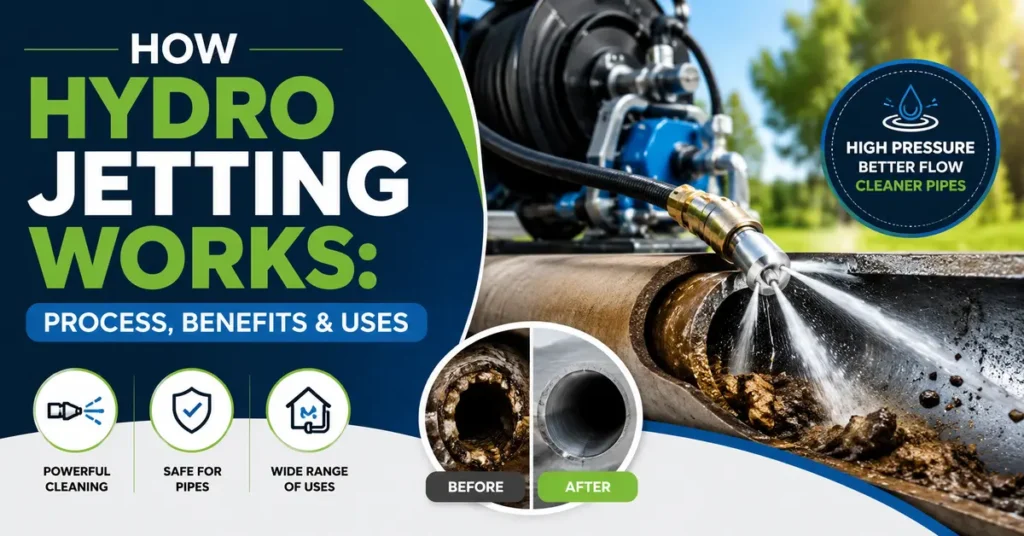
How hydro jetting works is simple: water gets pressurized to around 1,500–4,000 PSI and pushed through a flexible hose into your drain line or sewer pipe. Once that buildup is loosened, it just gets carried away downstream. In the end, the entire inside of the pipe gets cleaned, not only a single opening punched through the middle of the issue.
You had the drain snake last spring, and it got cleared. By September, though, it was slow again. You called the same plumber, they snaked it again, and now, three months later, here you are watching water back up in the kitchen sink for the third time this year.
That pattern isn’t a coincidence. A drain snake can open a passage through whatever is blocking things, but it really just shoves and scrapes the trouble spot and leaves the rest. So, grease buildup, mineral scale, and bits of organic debris stick to the inside surface, and then, somehow, they manage to close back within weeks. With hydro jetting, the idea is different at the core level because it tackles the pipe wall itself, not only the stuff sitting in the middle of the line.
What Is Hydro Jetting?
Hydro jetting is a hydraulic pipe-cleaning method that uses pressurized water as the only tool. There are no mechanical blades, no chemical treatments, and no drilling through blockages.
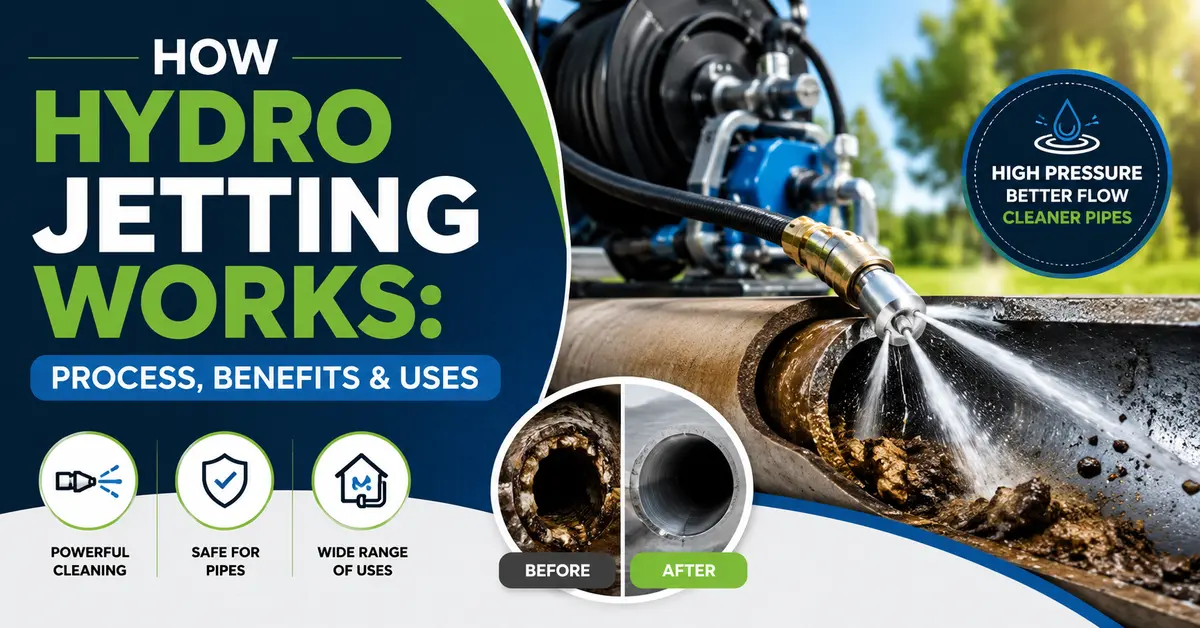
A machine pressurizes water to between 1,500 and 4,000 PSI for residential applications. A flexible hose carries that water deep into the pipe system. The nozzle at the end does two jobs simultaneously: forward jets break through the obstruction while rear-facing jets blast the pipe walls clean in all directions. The result is a pipe that flows at its original diameter instead of a pipe with a hole cleared through the middle of whatever built up over years.
How Hydro Jetting Works: The Process Step by Step
How hydro jetting works in a real service call follows a specific sequence that most homeowners do not know before the plumber arrives.
Camera inspection comes first.
Before any water goes into the line, a camera pipe inspection goes in. The camera shows exactly where blockages are, what type of residue is present, and if the pipe walls are still structurally sound enough to manage high-pressure cleaning. The camera basically confirms whether the line is suitable first, before any pressure is applied.
Jetting the line
The hose enters through a clean-out access point. As the nozzle moves through the pipe, forward jets at the nozzle face hit the blockage directly while rear-facing jets spray outward against the pipe walls at roughly 45-degree angles. The PSI water pressure cleaning cuts simultaneously and flushes everything it contacts downstream into the sewer main.
Final camera pass
After jetting, the camera goes back in to confirm the line is clear and the pipe walls are clean. This step confirms the job is complete before the plumber leaves.
Hydro Jetting vs. Snaking: The Honest Comparison
Hydro jetting vs snaking is not a debate about which is better in all situations. They solve different problems, and the right one depends on what is actually in the pipe.
Factors | Snaking | Hydro Jetting |
What it does | Creates a hole through the blockage | Cleans the full pipe diameter |
Grease buildup removal | Partial at best | Complete |
Tree root intrusion into pipes | Cuts roots, leaves fragments | Cuts roots, leaves fragments |
Pipe scale buildup | Does not remove | Removes completely |
Recurring drain clogs | Returns within weeks | Results over the last months to years |
Old pipes | Works on any condition | Requires intact pipe walls |
Best for | One-time soft clog | Buildup, roots, repeated clogs |
Preventive maintenance | Poor | Excellent |
Signs Hydro Jetting May Be the Right Solution
Signs you need hydro jetting rather than a standard snaking job are usually clear once you know what to look for.
- Recurring drain clogs every few months
- Multiple slow drains simultaneously
- Snaking clears, but the drain slows within weeks
- Main sewer line clog backing up multiple fixtures
- Grease-heavy commercial kitchen drains
- Tree root intrusion pipes confirmed by camera
If you’re experiencing one or more of these issues, a professional hydro jetting service can determine whether high-pressure cleaning is the right solution.
Is Hydro Jetting Safe for Pipes?
Hydro jetting is safe for pipes that are structurally intact. Cast iron pipes, PVC pipes, and clay pipes in good condition all handle the pressure without issue. The camera pipe inspection before jetting is what makes the service safe. If the camera reveals cracks, collapsed sections, or significant joint separation, the plumber addresses those issues before jetting. Running 4,000 PSI through a pipe with existing damage creates more damage. That is exactly why the camera comes first every time.
Hydro Jetting for Old Pipes in Baltimore
Hydro jetting for old pipes in Baltimore rowhouses is something we approach carefully and specifically. Baltimore has a significant stock of cast-iron drain lines and clay sewer laterals from mid-century construction that have been running continuously for fifty or more years.
Most of these older lines in good structural condition handle hydro jetting without issue. Cast iron, particularly, is a material that holds up well to PSI water pressure cleaning when the pipe wall has not corroded through. The camera pipe inspection before jetting is what distinguishes a safe job from a problematic one. A clay sewer line with root damage along its length needs the root intrusion addressed differently than a structurally sound line that just has heavy buildup inside it.
How Often Should You Hydro-Jet Drains?
Preventive drain maintenance using hydro jetting depends on what the line sees on a daily basis.
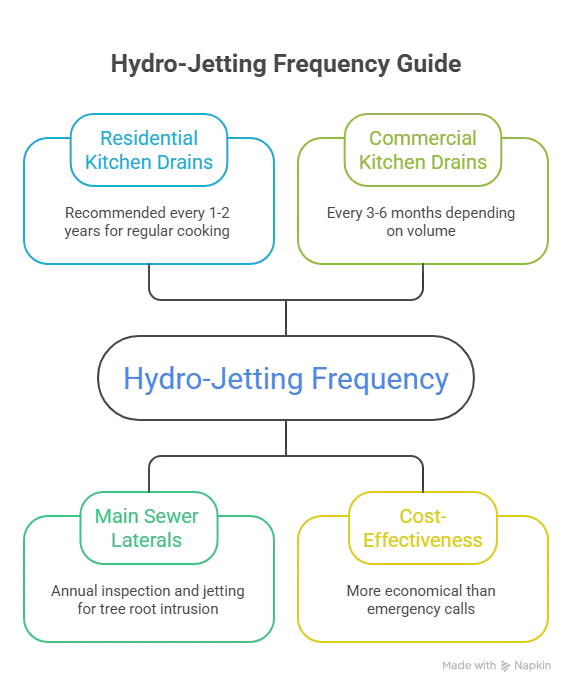
Residential kitchen drain lines in Baltimore homes with regular cooking benefit from jetting every one to two years. Main sewer laterals in older Baltimore properties with established trees nearby should be camera-inspected annually and jetted whenever the inspection shows meaningful root intrusion or buildup.
Commercial kitchen drains in food service operations need jetting every three to six months, depending on volume. The benefits of hydro jetting on a scheduled basis are significantly more cost-effective than emergency calls when a neglected line backs up completely.
Frequently Asked Questions
Hydrojetting is pressurized water cleaning that scours the full interior of a pipe rather than opening a hole through the blockage. Standard drain cleaning with a snake clears the immediate obstruction but leaves pipe wall buildup behind.
Forward-facing jets at 4,000 PSI cut through tree root intrusion pipes and break the root mass into pieces that the rear jets flush downstream. Camera inspection after jetting confirms the line is clear of root fragments.
Hydro jetting for old pipes is safe when a camera-pipe inspection confirms the pipe is structurally intact. Cracked or significantly corroded sections need repair before jetting, not after.
Use hydro jetting any time the same drain has been snaked more than once in a year, when multiple fixtures back up simultaneously, or when camera inspection shows significant pipe scale buildup or grease coating the pipe walls.
Hydro jetting cost varies based on the length of pipe being cleaned, how accessible the clean-out access point is, and whether camera inspection is included. Contact us directly for an assessment.
Conclusion
How hydro jetting works is the key difference between a drain that stays clear and one that requires repeated service calls. The benefits of hydro jetting go beyond fixing the immediate problem because cleaning the pipe wall rather than just the center of the blockage is what makes results hold for months instead of weeks. Hydrojetting vs. snaking is not a close comparison when the drain has a wall buildup problem that snaking has never addressed.
Contact Plumbing Solutions Pro today for high-pressure water jetting and let us assess whether your drain situation needs a snake job or a proper clean.