Why Your Sump Pump Isn’t Working (Common Problems & Fixes)
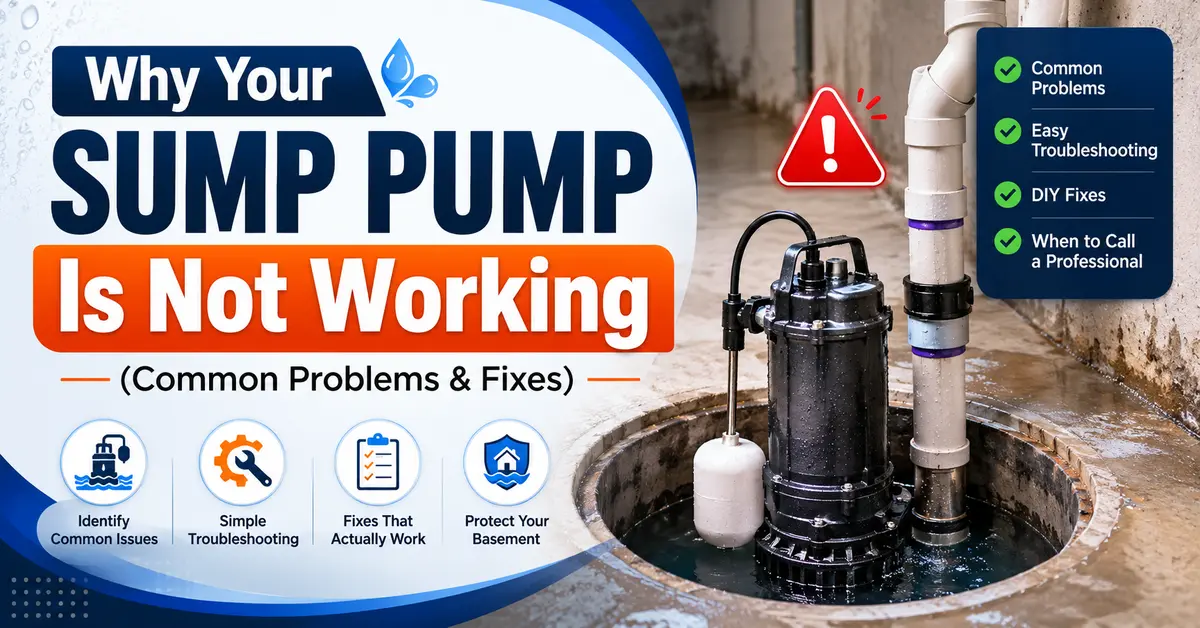
Sump pump repair is mostly about trying to sort out why the pump isn’t running, why it is making some odd noise, or why it is just sitting there failing to pull the water out of the pit. In a lot of cases the whole problem comes back to the float switch, the check valve, or the discharge line, instead of the motor itself.
Spring arrives in Baltimore, and two things happen at the same time. Rain levels climb, and every homeowner with a finished basement remembers that the sump pump has been sitting in the pit unused for six months. Some of those pumps fire up without a problem. Others hum, rattle, or do nothing at all.
A sump pump that seems to work when the weather is dry but then fails when it matters isn’t really a backup plan. Doing sump pump troubleshooting before the rainy season is what makes the difference between a dry basement and a water damage claim.
What Are the Signs Your Sump Pump Is Failing?
Signs your sump pump is failing can show up weeks before a full breakdown if you know what to watch for.
The most common early warning is a pump that keeps running constantly, even when there is no major rainfall or anything. That usually points to a stuck sump pump float switch or to groundwater intrusion that goes beyond what the pump can actually remove. A pump that runs for about thirty seconds then shuts off, and does it again and again, is short cycling. This can overheat the motor faster.
Watch for these:
- Pump not activating
- Water level not dropping
- Sump pump making noise
- Burning smell present
- Pump over seven years old
- No backup installed
Why Is My Sump Pump Not Turning On?
If your sump pump isn’t turning on, you should check the following things to find the problem:
First, you should check the outlet and the circuit breaker; then you can go from there. The sump pump uses an outlet that can sometimes get loose because of the vibration over time.
Try plugging something into that same outlet to see if it still works. If the outlet seems to be working, then you should lift the sump pump float switch by hand and see if the sump pump starts working.
The float should make the motor turn on when you lift it. If the sump pump does start working, then the float mechanism is not in the right position in the pit.
If the pump still won’t start after checking the outlet, breaker, and float switch, it’s time to schedule sump pump repair in Baltimore.
What Does Each Sump Pump Noise Mean?
Sump pumps making noise is not one problem. The sound tells you exactly which component is involved.
When the sump pump is running, and you hear a rattling noise, that means something is loose inside the pit. Loose debris, gravel, or small objects may be getting pulled toward the pump inlet.
If you hear a gurgling sound after turning off the sump pump, it means you need to replace the check valve. The check valve of the sump pump is important because it prevents water that the sump pump has already pumped from re-entering the pit when the motor is not running.
If you hear grinding or screaming from the motor, the bearings may be failing It means the bearings of the sump pump are not working right and you need to take the sump pump out and fix it.
How to Troubleshoot a Sump Pump ?
How to repair a sump pump yourself is realistic for some components and not others.
Fix yourself:
- Clear debris from the pit
- Reposition the float switch
- Replace the check valve
- Clear discharge line
- Test the pump manually
Call a professional:
- Motor failure
- Underground discharge blockage
- Installing battery backup
- Incorrect pump sizing
- Electrical circuit issues
Should You Repair or Replace Your Sump Pump?
Sump pump replacement vs. repair is a decision that mostly answers itself based on age and what failed.
Factors | Repair | Replace |
Unit age | Under 5 years | Over seven years |
What failed | Float, check valve | Motor, impeller |
Repair frequency | First time | Second time in two years |
GPM rating | Adequate | Undersized for pit |
Backup system | Battery backup installed | No backup exists |
A pump under five years old with a failed float switch is a repair. A pump over seven years old with a motor problem is a replacement regardless of what the repair would cost.
When Is a Sump Pump Failure an Emergency?
Heavy rainfall combined with water entering the basement often requires immediate diagnosis because even a minor pump failure can quickly lead to flooding.
Baltimore averages significant spring rainfall, and groundwater tables in parts of Baltimore County rise faster than in many other mid-Atlantic markets. A sump pump failure during a storm event cannot wait for a scheduled appointment. Water entering a finished basement at even a few gallons per minute causes damage that compounds every hour nobody addresses it.
When the pump has actually failed during active water infiltration, go ahead and remove the water with a wet-dry vacuum while you’re waiting for the repair. Try not to let that water just sit up against the drywall or on the finished flooring.
When Should You Stop Troubleshooting?
Sump pump repair cost varies based on which component failed, how accessible the pump is, and whether the discharge line needs attention alongside the repair. A float switch replacement on an accessible pump in good condition is a straightforward job. A motor failure on a pump buried under debris with a damaged discharge line involves significantly more work. Getting a proper assessment before any repair starts is what determines the actual scope.
Frequently Asked Questions
A stuck or incorrectly placed float switch is behind more failures. It keeps the pump from getting activated even when the pit is full of water.
Age and what failed determine the answer. The float switch and check valve replacement on a younger pump needs repair. A motor failure on a pump over seven years old requires replacement.
A backup battery sump pump activates automatically once the primary pump loses power. In Baltimore, those summer storms can knock out electricity for hours, and honestly, a back up system is the only barrier that really works when the main one fails.
A stuck sump pump float switch in the on position or incoming groundwater volume that exceeds the pump's GPM rating are the two most consistent causes.
Every year, a little before spring comes around. It’s that quick moment to test the float, check the discharge line, clean the pit, and make sure the check valve is sealing right. Usually, it takes under thirty minutes, but somehow it stops most of the problems that show up during the season.
Conclusion
Diagnosing sump pump issues covers a range of particular breakdowns, most of which come with clear warning signs before anything stops. A stuck float, a failed check valve, a clogged discharge line, and an aging motor all produce their own symptoms that point straight to what needs to happen for the fix. Catching them before spring rains arrive keeps basement flooding prevention from becoming a reactive cleanup.
If troubleshooting doesn’t solve the problem or your pump fails during heavy rain, Plumbing Solutions Pro can inspect the system, identify the cause, and recommend the right repair or replacement.